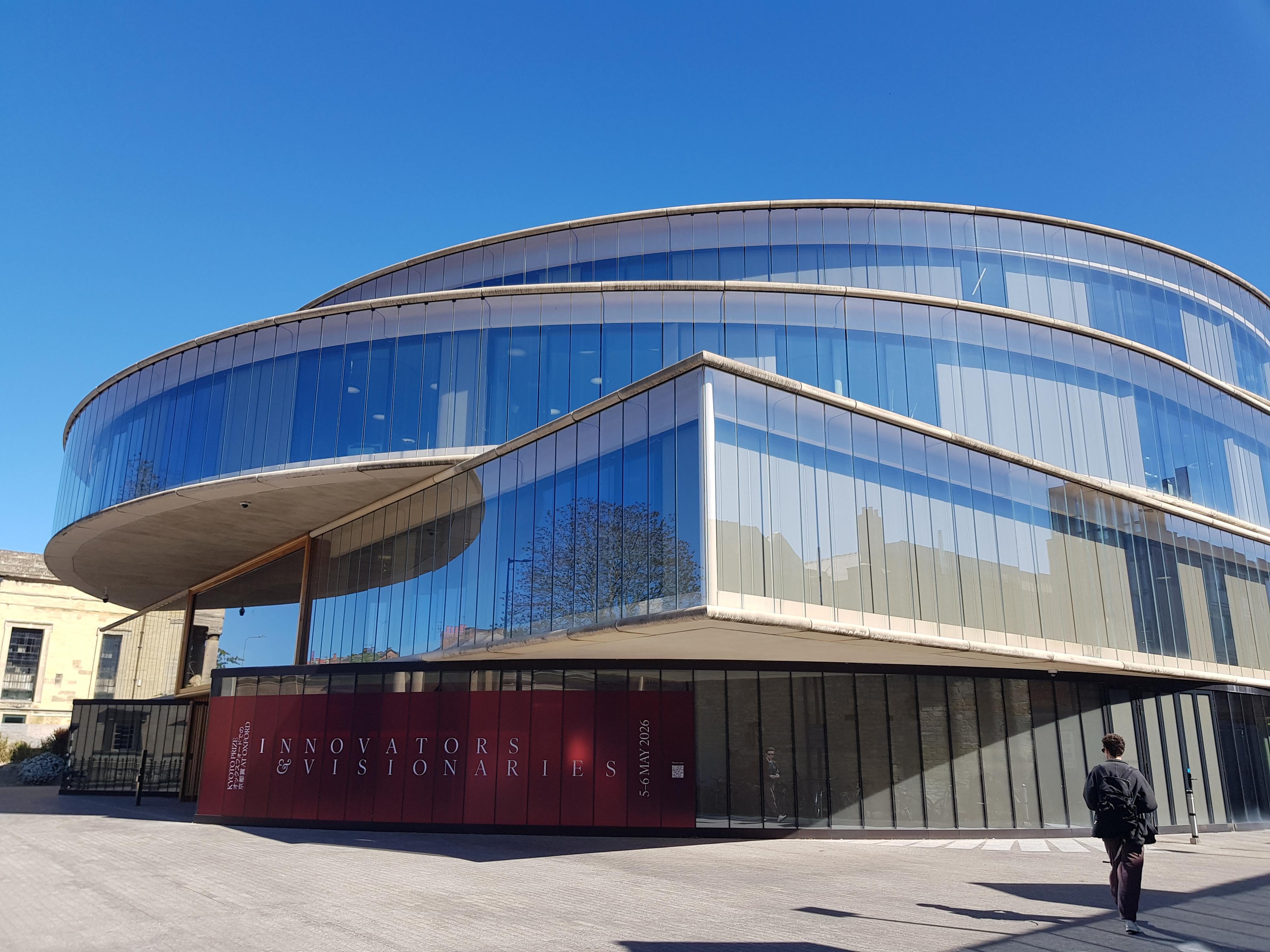
As a long-term resident of Oxfordshire I can share with you that Oxford’s school of public policy founded in 2010 following a £75 million donation from Russian oligarch Len Blavatnik is known amongst locals as The Biscuit Tins of Reputational Laundry, rather than by its given name of the Blavatnik School of Government. A glance at the building (below), recently described as ‘ageing like milk’ by the architectural writer Catherine Slessor, will testify to one aspect of the relevance of its adopted name. While a quick internet search may reveal the relevance of the other.
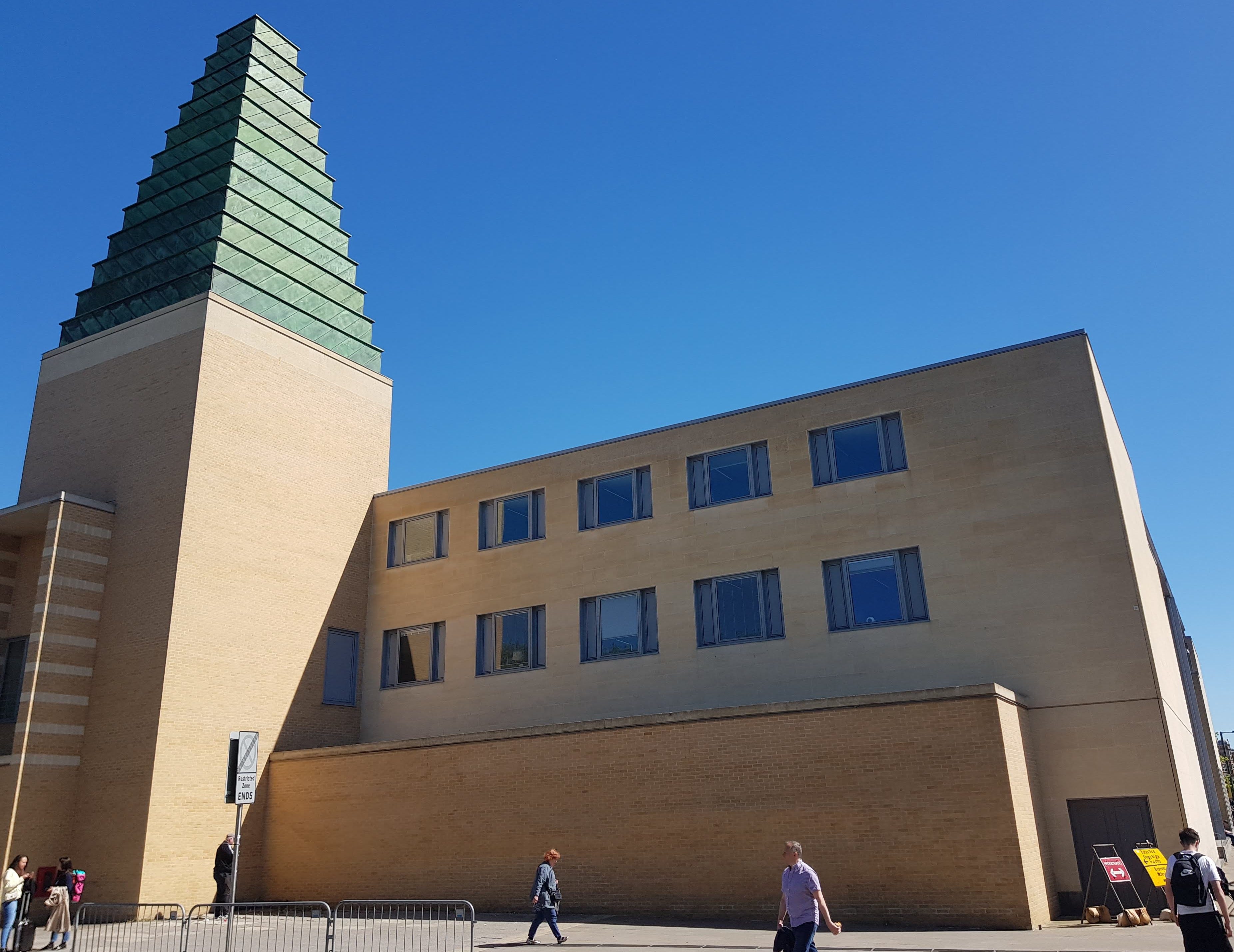
Similarly, it seems rash to dispute that The Ziggurat of Neo-Liberalism is the more appropriate name for Oxford’s Saïd Business School, (below) a recipient of £70 million plus from Wafic Saïd - a man who presided over the addition to his school of a cuboid annexe named after Margaret Thatcher, and who built a 30m gold-topped obelisk in the grounds of his mansion to honour the Diamond Jubilee of Elizabeth II.
The global rich are increasingly pouring money all over Oxford, like honey onto a cake that’s already been rather thickly iced. Co-founder of Oracle, long-term Trump associate and Republican financer Larry Ellison is donating hundreds of millions to establish a campus to be known as The Ellison Institute of Technology. Ellison is also repurposing the culturally significant pub The Eagle and Child (known locally as The Bird and Baby) where Tolkien and C. S. Lewis used to meet to chunter about elves and God over warm stout.
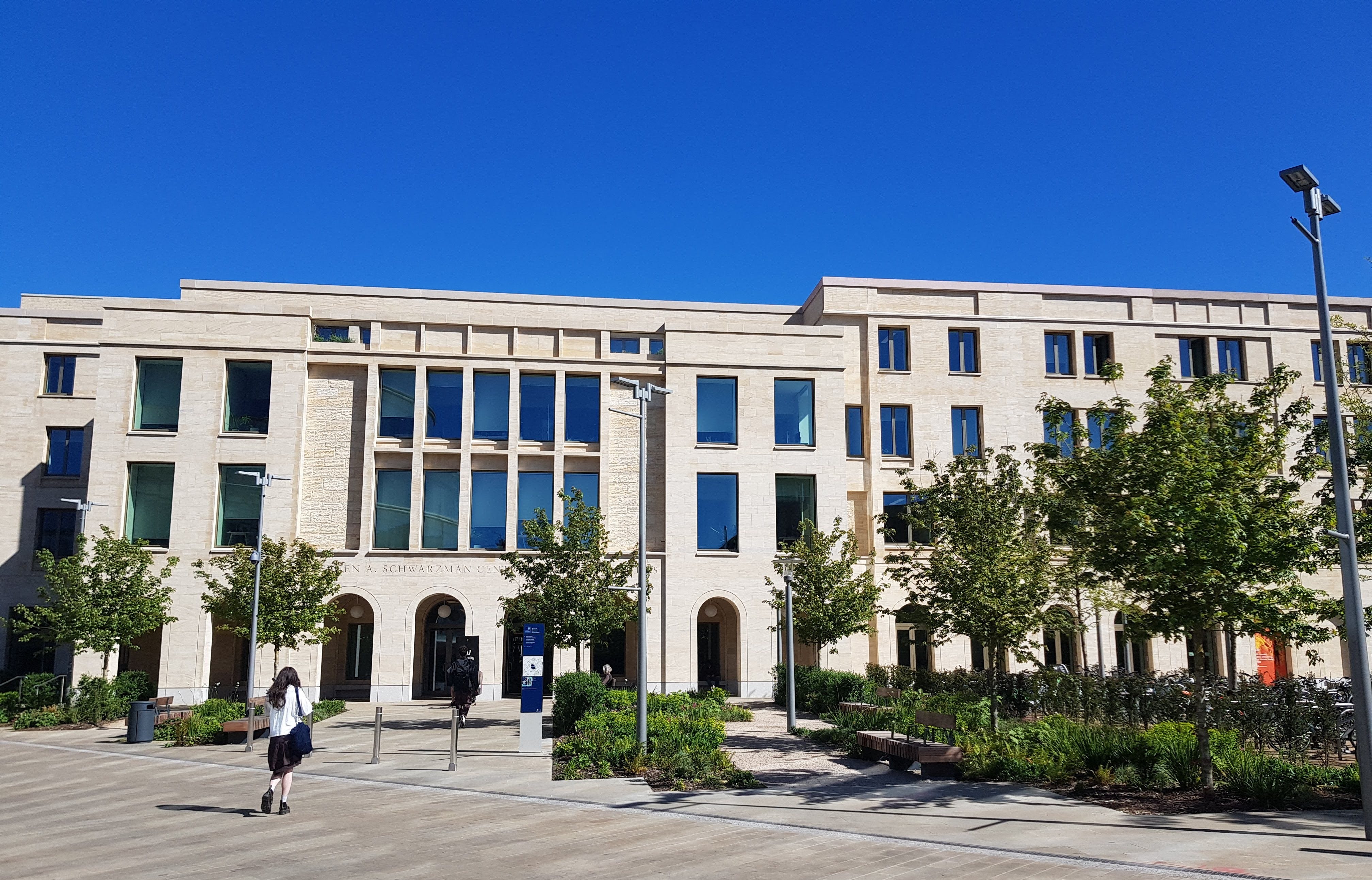
Last week, I went with my family to the inauguration of The Stephen A. Schwarzman Centre for the Humanities - the latest endowment from the global super rich to the University of Oxford, following Blackrock CEO and Trump advisor Schwarzman’s £150m donation to the ongoing cause. As far as I know, the Schwarzman Centre has yet to be informally named by the residents of the city, and given its relatively innocuous appearance - a kind of mid-brow, managerio-Classical affair, faced back and front in traditional Oxford Clipsham stone - I am struggling to come up with a sticky zinger myself.
Perhaps the answer lies inside, where the building burrows deeper than a wisdom tooth, via its underground concert hall, etc, and where beneath its fractally latticed atrium, its inauguration ceremony last week took place.
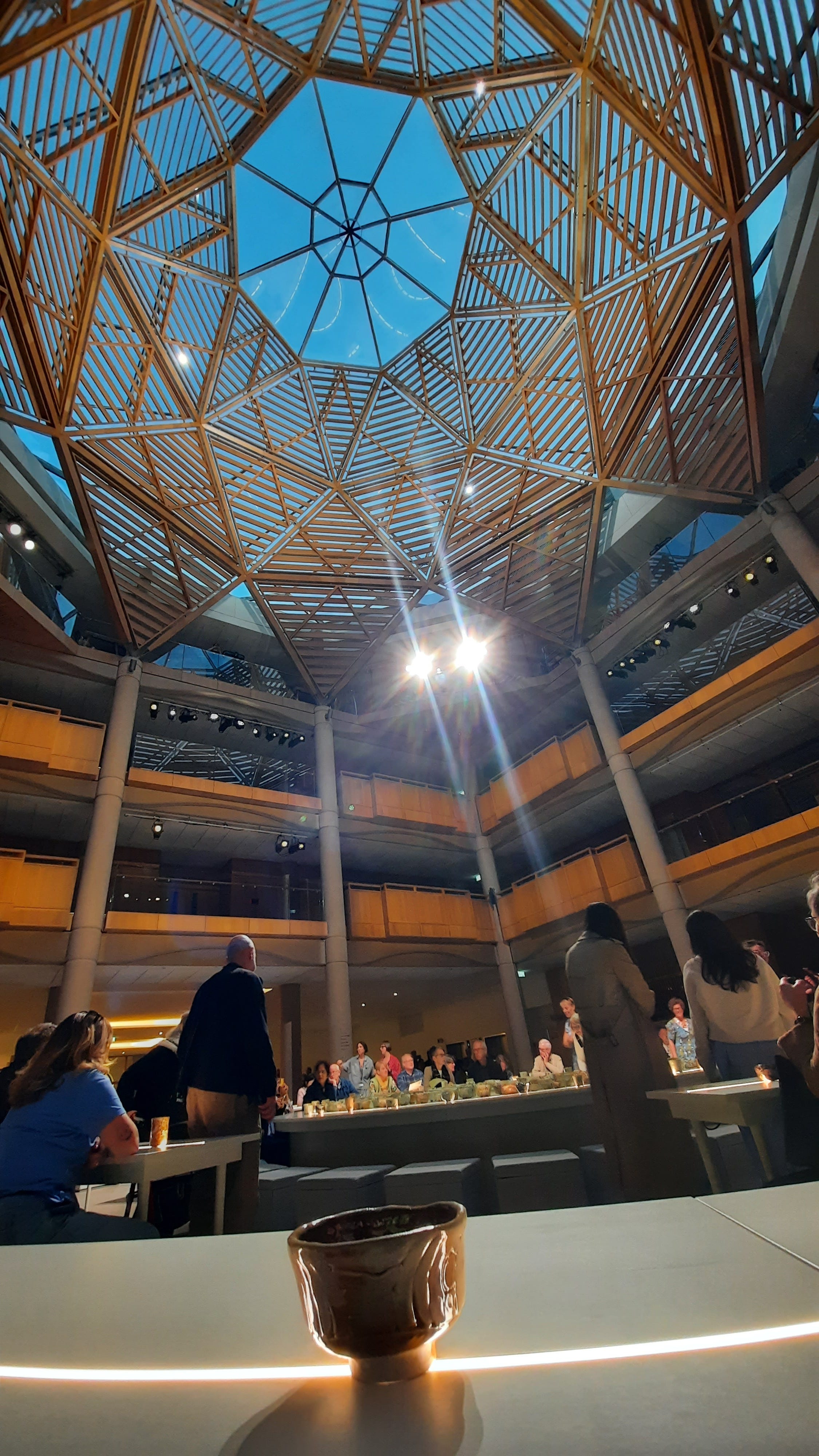
The artist Es Devlin (below) took centre stage at a pleasingly daft ritual in which members of the public with free tickets (us) sat circularly and were asked to cup bespoke bowls of tea in silence, while listening to recorded soundbites from academics and AI ethicists emoting liberally on incompatible aspects of humanity set to an ambient soundscape.
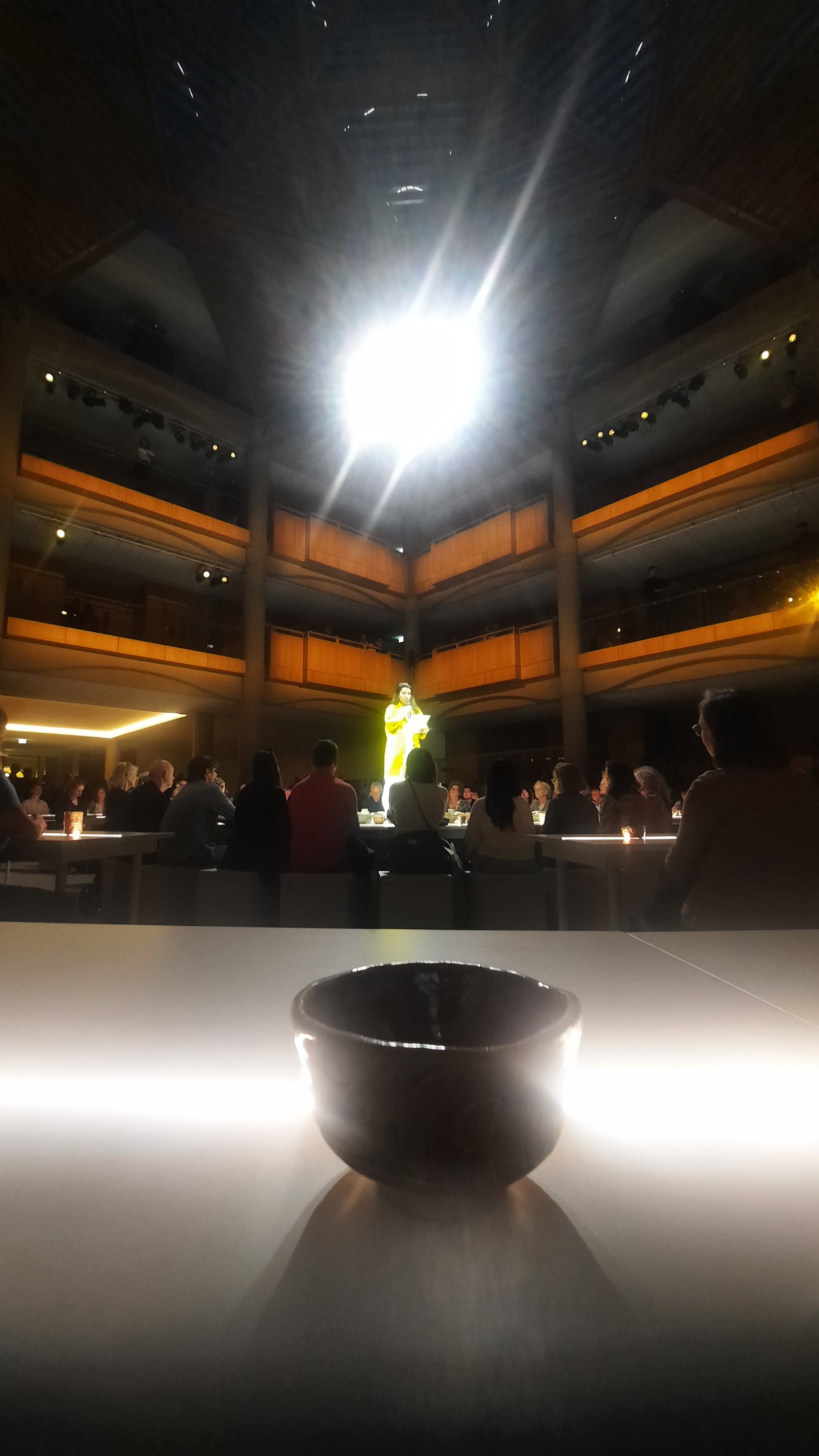
Somewhat woolly, yes, and rather self-serious, and at the back of it all the cognitively dissonant rattle of Blackrock billions could always be heard. But the tea was absolutely magic. As was the original choral piece of music composed by Nico Muhly specifically for the night and sung from on high by the Chamber Choir of Oxford University. Maestro!
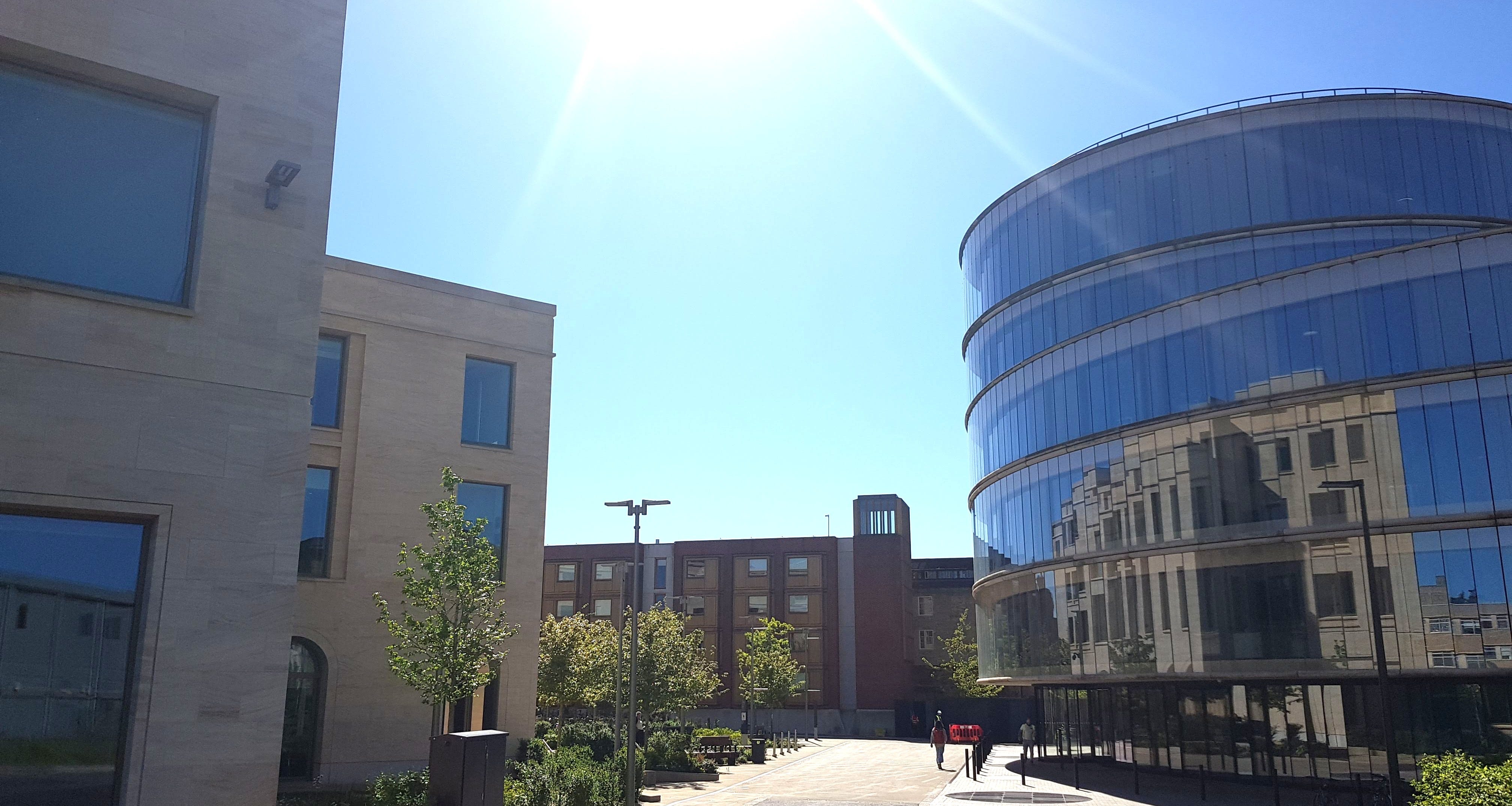
Coming out of the Schwarzman Centre afterwards, what was thrilling, and what I had not truly processed before, was its apposite proximity to the Blavatnik biscuit tins, like a kind of post-cold war money-off, a global philanthropical pissing contest with Oxford as the chosen bullseye for this bout of status combat via architecture. Or is that too much? Certainly, it was enjoyable when I returned some days later in the gaudy day to see that the Schwarzman actually looked at its best within the distorted, curved reflection of the Blavatnik, where it magically invented a kind of Yemeni Cubism (below).
This stuff runs deep in Oxford. Not half a mile from the Schwarzman, in the now-demolished Beaumont Palace, Kings Richard I and John were born in the twelfth century. While we can tick off the contributions of the city to the Establishment of this country and further afield, with 26 and counting UK prime ministers educated here, with God-knows how many non-UK government heads having been spruced up across the centuries by this finishing school for domination and ascent.
A contrasting fixture from a different stream of Oxford’s establishment, the writer Philip Pullman, remarked, in accounting for the profusion of Fantasy writing produced and set in the city, that Oxford had a ‘Solvent effect on reality.’ He meant by that that the look and feel of it - its creamy walls and arches giving unexpectedly onto whole, hidden quadrangular worlds - could dissolve the everyday and stimulate the writer’s imagination. And so repurposing Pullman’s sentiment, I think it might apply to our donors as well; Oxford has a solvent effect on them too…
Here you can turn up as one thing and leave as another. A name chiselled above a door; an institute endowed, a medal given to a benefactor in the university’s Wren-built Sheldonian theatre - Oxford can dissolve and re-veneer the way that you’re seen by the world. Or dissolve it at least for a while, as followers of the case of Cecil Rhodes will know very well.
*
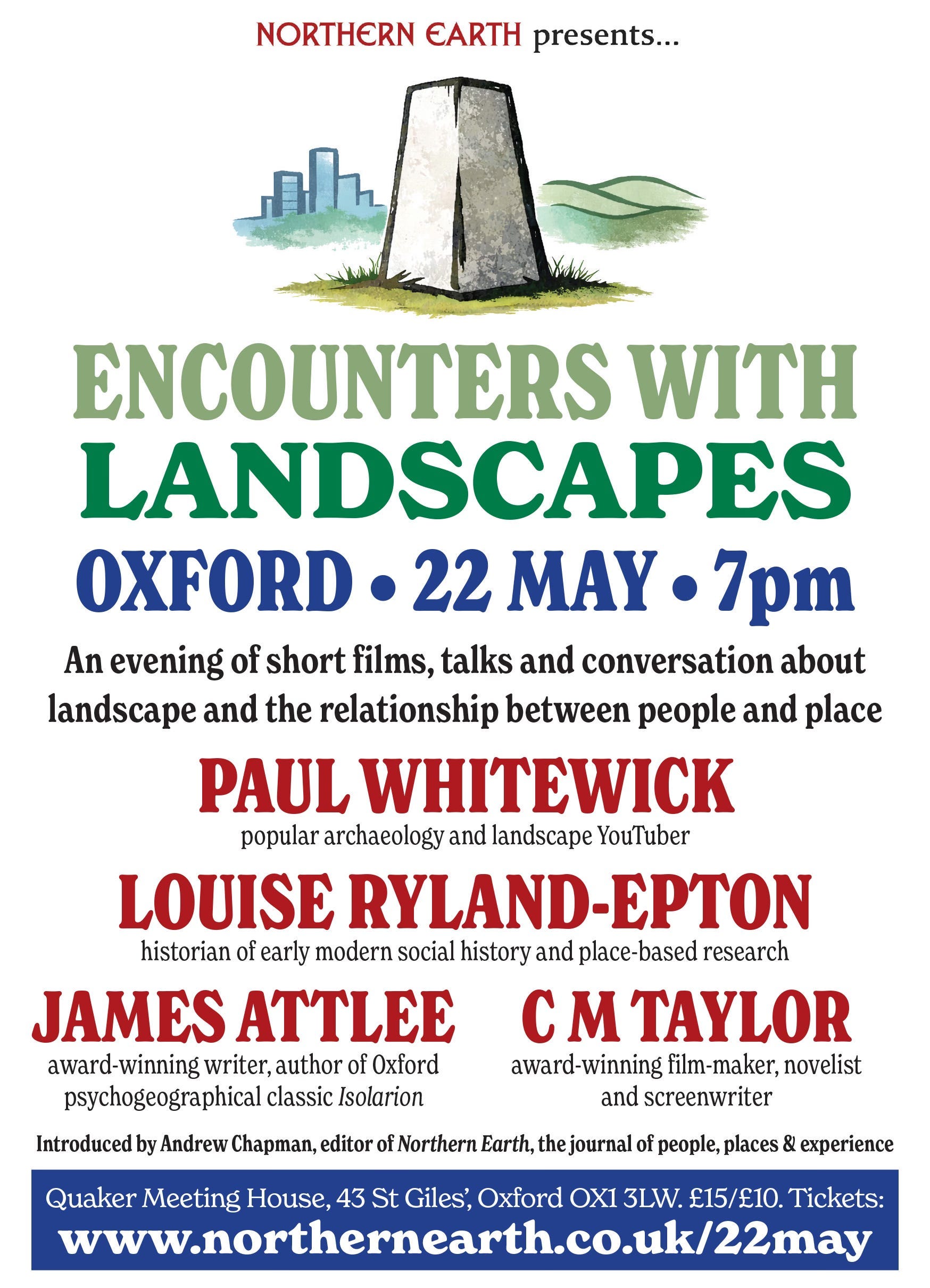
The above piece was written due to its thematic appropriateness to an upcoming Northern Earth evening in Oxford, considering people and place. You can buy tickets here.
James Attlee, who knows as much about the landscapes of Oxford as anyone, will be there. I’ll be showing a single-shot film I made about the landscapes of rural Oxfordshire, and I’m as excited as the audience to learn what Louise and Paul will be bringing.
The event takes place on 22nd May at the Friend’s Meeting House in Oxford. Pleasingly, the Meeting House is close to an original Oxford landscape, a henge now lost deep beneath St Giles’ church, as well as being close to the Woodstock Road, which, as my friend Paul Lenz recently told me, is a good four thousand years old.