

As you read this I’ll be canoeing down the Thames on an annual midsummer trip with three old friends, one of whom really had better have brought a working tent this year. And I just wanted to take a moment, just as I did at the winter solstice, to have a quick look round creatively, and see where we are. This post then is split into the sections: Floaters, Films and Farwell.
Floaters
First thing is I’ll be ‘in conversation’ in Oxford with cult author James Attlee about my new novel Floaters on the evening of Wednesday 24th June at Caper bookshop. (James is one of the most fluid and energetic speakers I know and I won’t be hogging the airtime.)
Described by The Guardian as a ‘coming-of-age revenge caper’, limited edition copies of Floaters kept back for readings will be for sale on the night. Only 215 copies of this edition will ever be printed - one for each mile of the Thames. Each copy is hand-numbered, hand-named, and signed.
Tickets for the event can be bought here
Wednesday, 24 June 2026 at 19:30 - 20:30 BST
Caper, 74-77 Magdalen Road, Oxford, Oxfordshire, OX4 1RE

Films
Next up are Slow & Spurious films.
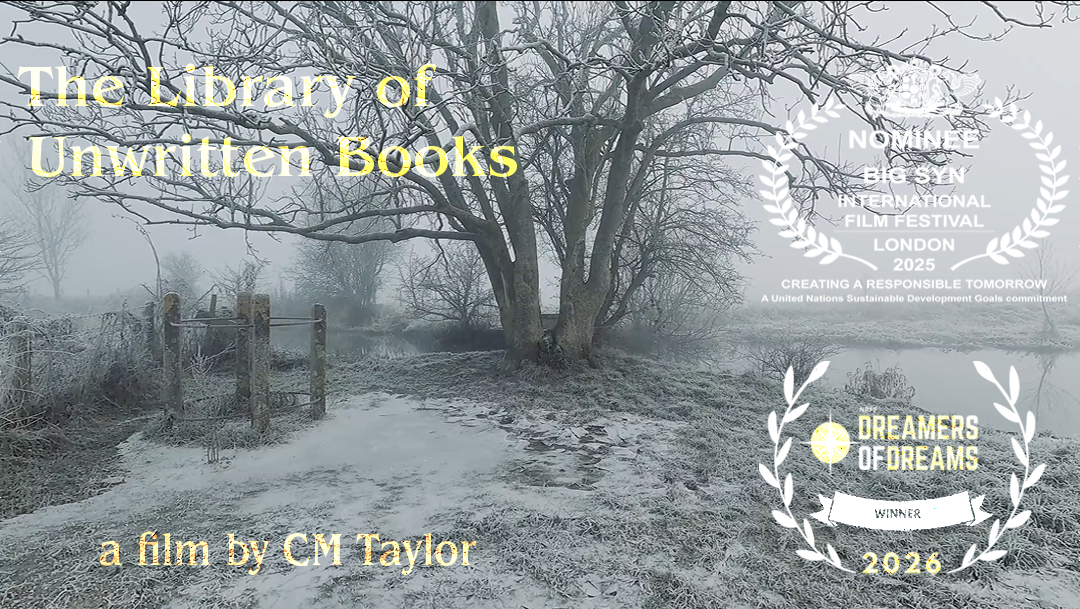
I was delighted that my short film The Library of Unwritten Books won Best Art or Poetry Short at the very cool Dreamer of Dreams film festival in London and I have dutifully added their laurel, with my poor photoshop skills, to the homespun film poster.
There are two more Slow & Spurious films in the works. For those who don’t know the story behind this commitment to making weird, slow films with no skills or cash, you can read about that here. (Viewable via that link incidentally is the completed short experimental film Analogue Digital Dead Alive - winner now at seven film festivals).
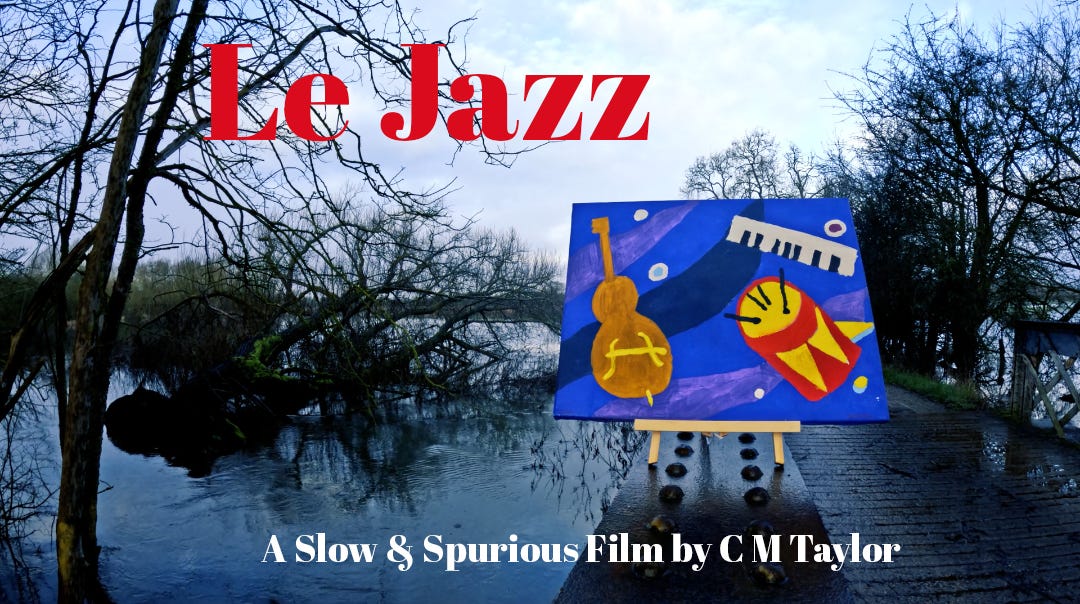
The first new film in the works is called Le Jazz (see homespun poster at top of the post) named after an unusual painting I bought off the wall of a restaurant on the Costa Blanca in Spain twenty years ago.
While the second new film is named after the flags of a non-existent country I imagined. The country is called Nalbandia. (I don’t mention this in the new film itself, but Nalbandia is so-called after the Argentinian tennis play David Nalbandian, whose name I have always loved.)
During a World Cup seems the right time to represent the inhabitants of imaginary countries, not just those tethered bothersomely to earth, and I would like to see some kind of tournament for imaginary countries put in place soon - perhaps a sauntering while whistling contest.
And a Farewell
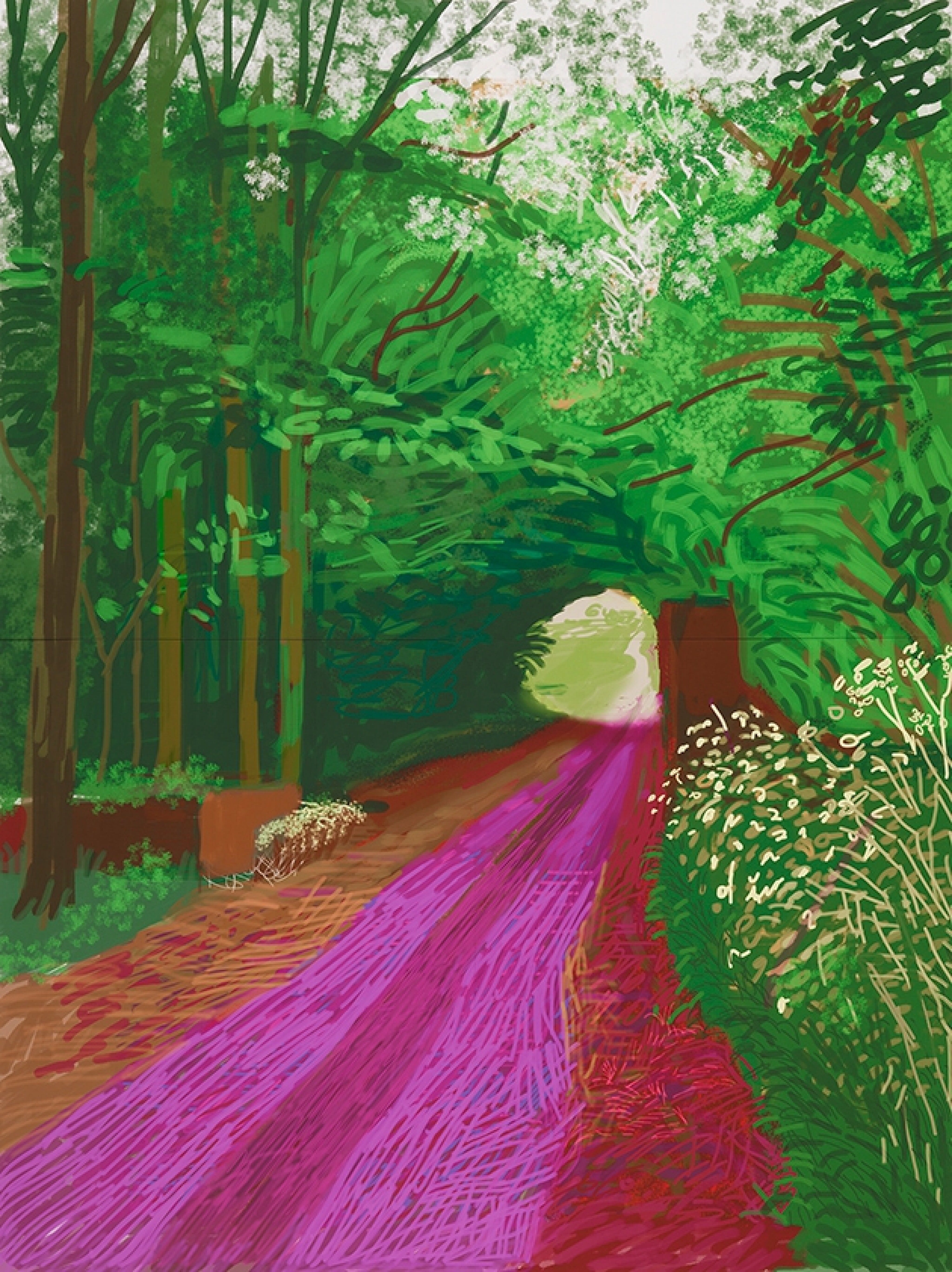
William Boyd in Sunday’s Observer called David Hockney England’s Picasso, but for me Boyd had sights on the wrong man.
In The Shock of The New, Robert Hughes describes Matisse’s brushwork from his Fauve years as having a ‘eupeptic, take-it-or-leave-it quality which seems to deny craft.’ Remind you of anyone?
The light of the Riviera gave birth to Fauvism in Matisse, and when Hockney moved to California he was similarly freed. Both fell in love with the light and the colour of more Southern climes.
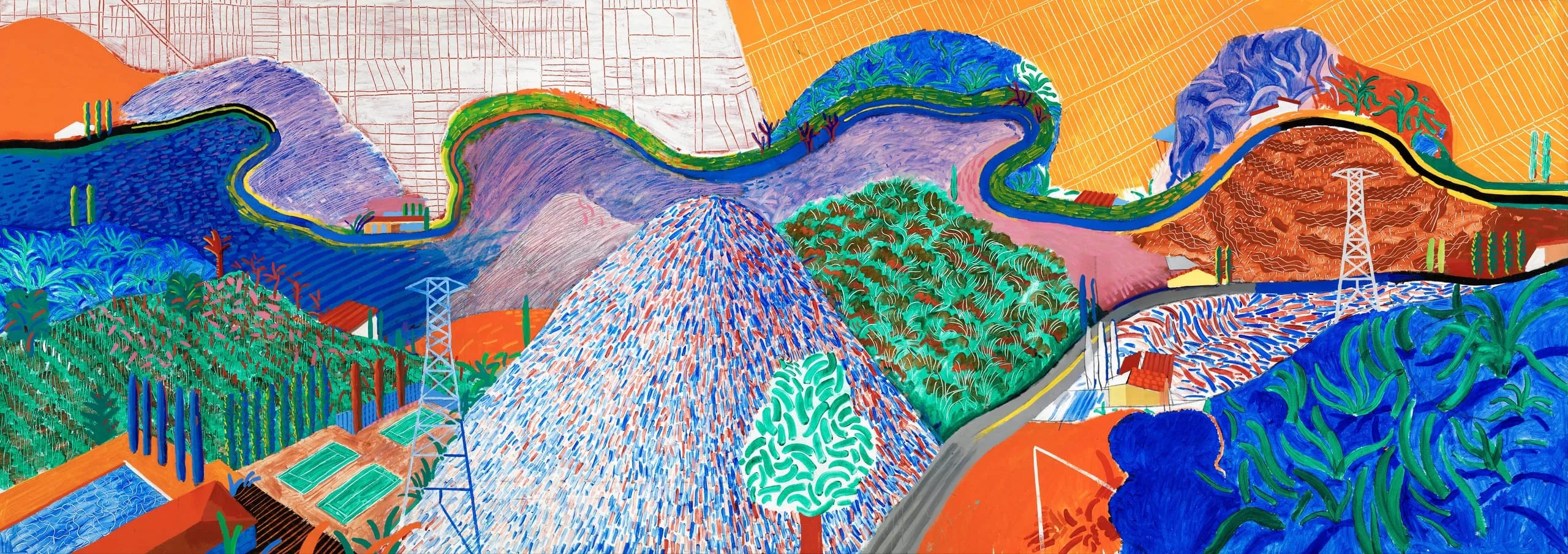
‘With decoupage in the 1940s’ Hughes again says of Matisse, then in his 70s, ‘he rediscovered the incisive liberty of his fauve years.’ Just as Hockney rediscovered incision and liberty in his own eighth decade, with his iPad and large-scale digital drawings.
As a culture-mad kid from West Yorkshire Hockney meant a lot to me, and we could talk if we wished about the slender moment of postwar meritocracy in the UK’s cultural industries which Hockney thrived in, and how that moment has now largely gone.
But no politics now. His brushes are finally down, and the sun is up towards its midsummer height. Like Matisse, Hockney was in love with colour and with light.
He was perhaps England’s great colourist. Which is no bad title to have.
Thank you as always for reading.
Blessings on your loved ones and your home.
Paddles in!
Craig